


Main Bouquet Trends of 2026
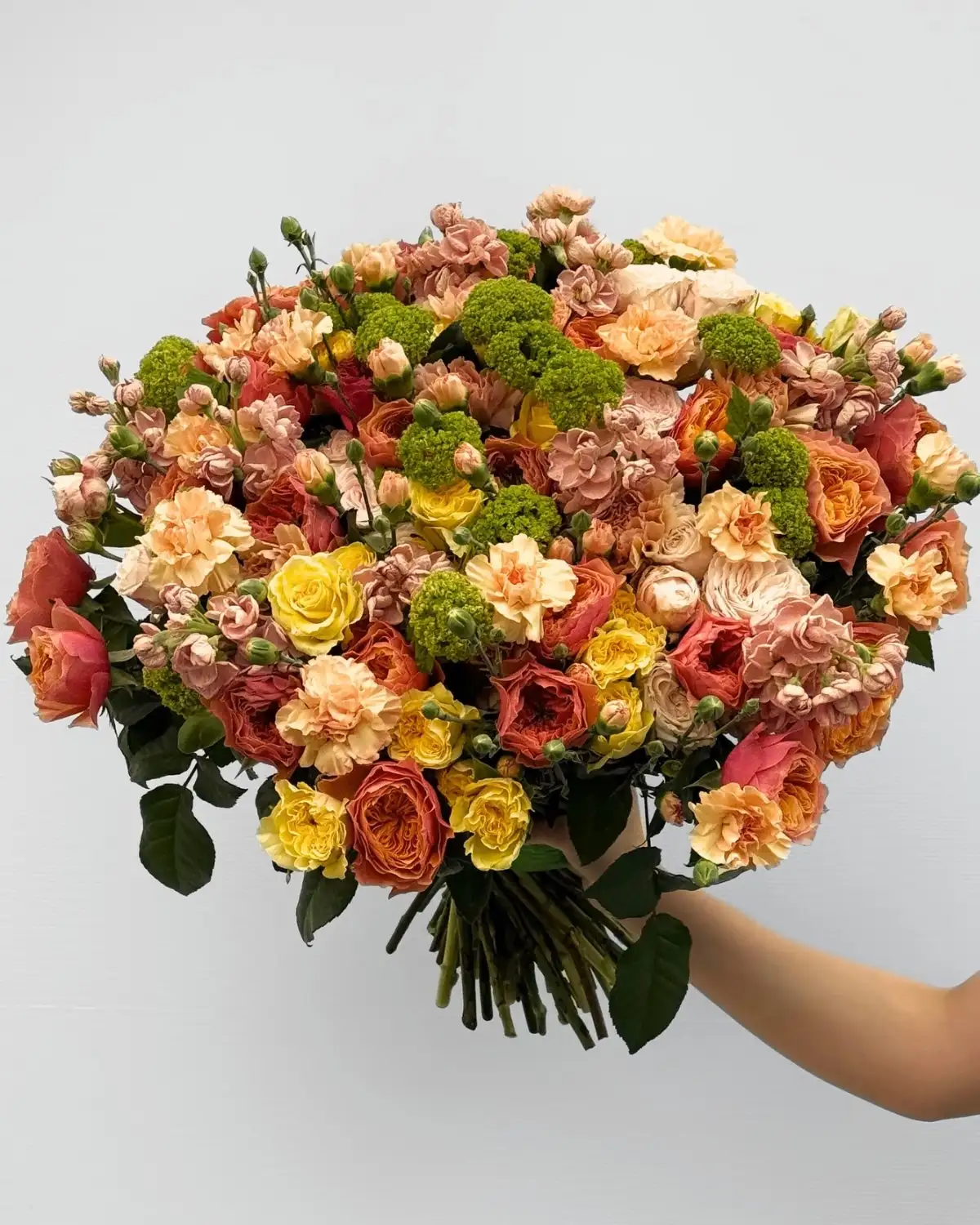
We’ve all seen those overly stiff, plastic-wrapped bouquets that look more like a supermarket product than a gift from the heart. In 2026, the floral world is finally breaking free from those "perfect" but cold standards. When you give flowers today, it’s not about following a manual; it’s about choosing a piece of nature that feels honest, raw, and deeply personal.
Bouquet Color Trends of 2026
Remember the days when everything was either neon-bright or a safe, sugary pink? In 2026, we’re seeing a shift toward a much more sophisticated and "earthy" palette. Walking into a modern flower shop Yerevan, you won’t be greeted by aggressive contrasts. Instead, you’ll find a soothing blend of terracotta, warm sands, and mossy greens. These are colors that don't just look good on camera; they actually make you feel a sense of calm and belonging.
The real secret this year is the "dusty" finish. Even the most vibrant blooms have a muted, misty quality to them, which allows a single flower bouquet to mix multiple colors without feeling cluttered. It’s a harmonious approach that mirrors the way colors blend together in a wild meadow at dusk.
Wedding Bouquet Trends
Wedding fashion has officially entered the era of "nostalgic tenderness". Brides are moving away from "showy" exotic flowers and returning to the plants that actually mean something. Think of the flowers that grew in your grandmother's garden: the kind that carry a scent so familiar it can transport you back in time.
Fragrant jasmine, tiny, delicate violets, and heritage shrub roses are the real stars of 2026. These aren't just accessories; they are emotional anchors. When you order flowers for delivery for a 2026 wedding, the goal is an organic, "just-gathered" look. It’s about celebrating the bride’s personality with a bouquet that feels light, fresh, and unpretentious.
Why Natural Bouquets are Gaining Popularity
We spend so much of our lives staring at screens that we’ve developed a deep, collective hunger for the wild. Naturalism isn't just a style; it’s a form of therapy. We’ve started to find beauty in what we used to call "imperfections", the natural curve of a stem, an asymmetrical leaf, or a cluster of wild field grasses.
Local florists providing a flower bouquet for everyday moments are seeing a total rejection of artificiality. Gone are the sprays of glitter and the stiff plastic wraps. Using seasonal flowers is now seen as the ultimate sign of taste and environmental awareness. It ensures that no two bouquets are ever exactly the same, just like the people receiving them.
Are Minimalist Bouquets Still Fashionable?
Absolutely, but the vibe has changed. Minimalism in 2026 isn't about being "empty"; it’s about being "breathable". It’s the difference between a crowded room and a quiet art gallery. Instead of a bunch of three identical roses, today’s minimalist flower bouquet might feature a single, architectural branch or one stunningly unique exotic bloom.
When you visit a flower shop Yerevan, look for designs where each element has room to "breathe". This style is perfect for modern homes; it adds a pulse of life to a room without taking over the entire space. It’s proof that sometimes, a single, well-chosen flower can say much more than a massive, silent basket.
FAQ
What kind of packaging is fashionable in 2026?
The era of plastic and cellophane is over. This year is all about "zero plastic". We’re seeing beautiful, tactile materials like raw linen, jute, and recycled papers. Many people are even opting for "naked" bouquets tied with nothing but a simple, soft cotton ribbon. It lets the flowers be the stars of the show.
Which flowers are most used in modern bouquets?
We’re seeing a huge demand for plants with "character". Wild orchids, anthuriums, and a massive variety of natural greenery from eucalyptus to dried wheat stalks are very popular. Dried elements are especially loved because they add a layer of texture and a nostalgic, timeless feel to any flower bouquet.