


How Has Bouquet Style Changed Over the Past Decades?
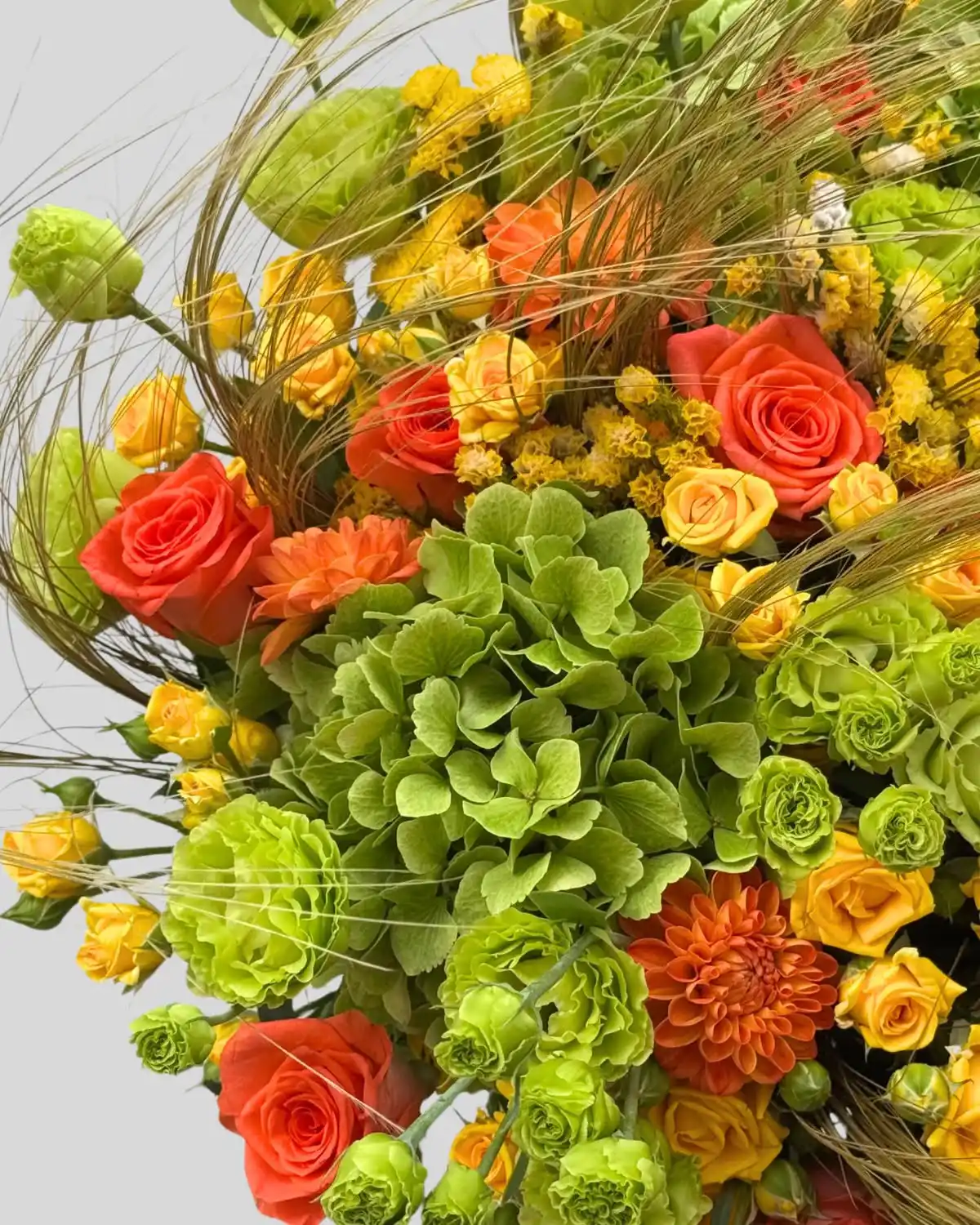
Over recent decades, floral fashion has moved away from rigid geometry and synthetic wraps toward effortless organic flow, mindful sustainability, and individual artistic storytelling. Today, contemporary bouquet trends view every botanical creation not as an assembly-line product, but as an expressive piece of sculpture that celebrates natural imperfection and subtle textures.
What Were Bouquets Like Several Decades Ago?
A few decades ago, the floral world operated under strict rules of symmetry and uniformity. Most arrangements followed predictable shapes—either tight, spherical domes or stiff, upright triangles designed to look formal from a single angle. Florists typically relied on a limited roster of traditional stems, such as standard red roses, stiff carnations, and towering gladioli, packing them together tightly to form a flat, dense surface where individual stems rarely had room to breathe.
Color palettes during that era were equally predictable and saturated. Monochromatic schemes dominated events, accompanied by high-contrast primary shades—bright reds, stark whites, and intense yellows. Subtle gradients, moody pastels, and earthy greens were virtually absent. The primary goal of floral gifting back then was to demonstrate abundance through sheer stem count and density, rather than emphasizing botanical diversity, playful rhythm, or the graceful natural curve of each stem.
How Have Bouquet Packaging and Design Changed?
Perhaps the most dramatic evolution has taken place in wrapping materials and presentation aesthetics. In earlier decades, elaborate layers of crinkly cellophane, heavily textured foil, neon crepe paper, and oversized plastic ribbons were seen as signs of luxury. Today, that aesthetic feels dated and wasteful. The modern era prioritizes eco-conscious materials: rustic kraft paper, biodegradable sheets, soft parchment, and flowing raw-silk or linen ribbons in understated earthy hues.
Beyond the materials themselves, the philosophy behind packaging has shifted entirely. Where old-school wrapping often concealed flawed stems and competed with the flowers for attention, thoughtful bouquet design now treats packaging as a quiet frame. In fact, many florists choose to skip external wrappings altogether. Leaving stems exposed and securing them with a simple trailing fabric ribbon allows the arrangement to feel as though it was gathered fresh from a meadow that very morning.
What Are the Main Features of Modern Bouquets?
Contemporary floristry celebrates loose, airy silhouettes and dynamic heights. Instead of forcing flowers into identical molds, modern bouquets embrace asymmetry, letting delicate buds, branches, and twisting vines float above broader blooms to create a genuine sense of motion. You will often see surprising combinations: garden roses mingled with Queen Anne’s lace, scented eucalyptus, textured ornamental grasses, and even dried elements that add layered depth.
Color stories have also become far more nuanced, favoring muted palettes of dusty blush, terracotta, champagne, mauve, and soft sage over screaming brights. In addition to hand-tied stems, stylish presentations in hat boxes, ceramic vessels, and architectural vases have earned a permanent place in everyday gifting. Embracing these evolving global sensibilities, Mon Amie brings this European touch to local floral culture, curating expressive collections tailored to contemporary aesthetics. Exploring diverse bouquet styles makes it easy to find an arrangement that speaks to individual taste, making curated trendy bouquets an effortless balance of quiet luxury and relaxed nature.
Are Large Bouquets Still in Style?
Yes, generous arrangements remain popular, but their structure has completely transformed. A grand arrangement is no longer a heavy, compact cluster of hundreds of identical stems. Today's statement arrangements gain their impressive presence through sprawling foliage, varied heights, and airy spacing that creates an architectural, breathable masterpiece.
What Is the Difference Between Classic and Modern Bouquets?
Classic designs focus on strict symmetry, dense packing, uniform stem heights, and traditional focal flowers. Modern designs prioritize organic, dynamic silhouettes, botanical variety, subtle tonal color palettes, and minimal or eco-friendly wrapping that highlights the natural beauty of the blooms.
How to Choose a Modern and Stylish Bouquet?
Look for arrangements with asymmetrical lines, dimensional layering, and visible space between stems so every blossom can open freely. Choose palettes with soft tonal shades like nude, dusty rose, or cream paired with wild greenery, and select eco-friendly wrapping like simple paper or a single fabric ribbon.